

Tongue Diagnosis in TCM: What Your Tongue Can Reveal About Your Health

When you visit an acupuncturist for the first time, you may be surprised when one of the first things they ask to see is your tongue. In Traditional Chinese Medicine (TCM), tongue diagnosis is a powerful diagnostic tool used for thousands of years to provide insight into an individual's overall health and internal balance.
What Is Tongue Diagnosis?
Tongue diagnosis is a fundamental assessment method in Traditional Chinese Medicine, alongside multiple other methods.
In TCM, the tongue is considered a map of the body’s internal organs and functions. Changes in the appearance of the tongue can reflect patterns of imbalance before more obvious symptoms develop.
While tongue diagnosis is not used to diagnose specific issues, it helps holistic practitioners identify patterns that may contribute to symptoms such as fatigue, digestive issues, sleep disturbances, emotional stress, headaches, hormonal imbalances, and chronic pain.
Why Is the Tongue Important in TCM?
According to TCM, the tongue is connected to the body’s Qi (vital energy), Blood, and organ systems. Because it is easily visible and changes relatively quickly in response to internal health conditions, it serves as a valuable indicator of overall wellness.
The tongue can provide clues about:
Digestive function
Circulation and blood health
Hydration levels
Sleep quality
Stress and emotional wellbeing
Hormonal balance
Energy levels
Inflammation within the body
What Practitioners Look For
A TCM practitioner evaluates several aspects of the tongue during an examination.
Tongue Color
The color of the tongue body can reveal important information about circulation, energy, and overall balance.
Pale Tongue: May indicate deficiencies in Qi, Blood, or overall vitality, commonly observed in individuals experiencing fatigue, low energy, or poor circulation.
Red Tongue: May indicate excess heat or inflammation in the body and could be linked to stress, irritability, insomnia, or various inflammatory conditions.
Purple Tongue: May indicate stagnation of blood or impaired circulation.
Tongue Shape
The shape and size of the tongue can also offer valuable insight into internal balance.
Swollen Tongue: Suggests fluid retention, digestive weakness, or dampness accumulation according to TCM.
Thin Tongue: Suggests Yin, Blood, or body fluid deficiencies.
Scalloped Edges: Suggests Spleen Qi deficiency and digestive weakness, according to TCM theory.
Tongue Coating
The coating on the tongue indicates the state of the digestive system and the body's ability to process and absorb various nutrients.
Thin White Coating: Often suggests a healthy system and is considered normal
Thick Coating: Often suggests dampness, phlegm, or a digestive imbalance.
Yellow Coating: Often suggests heat within the body, particularly in the digestive system.
No Coating: Often suggests depleted body fluids or Yin deficiency.
Tongue Moisture
A practitioner also examines how moist or dry the tongue appears to be.
Dry Tongue: Indicates fluid deficiency, heat, dehydration, or chronic stress.
Excessively Moist Tongue: Indicates an accumulation of dampness or a disruption in fluid metabolism.
The Tongue as a Map of the Body
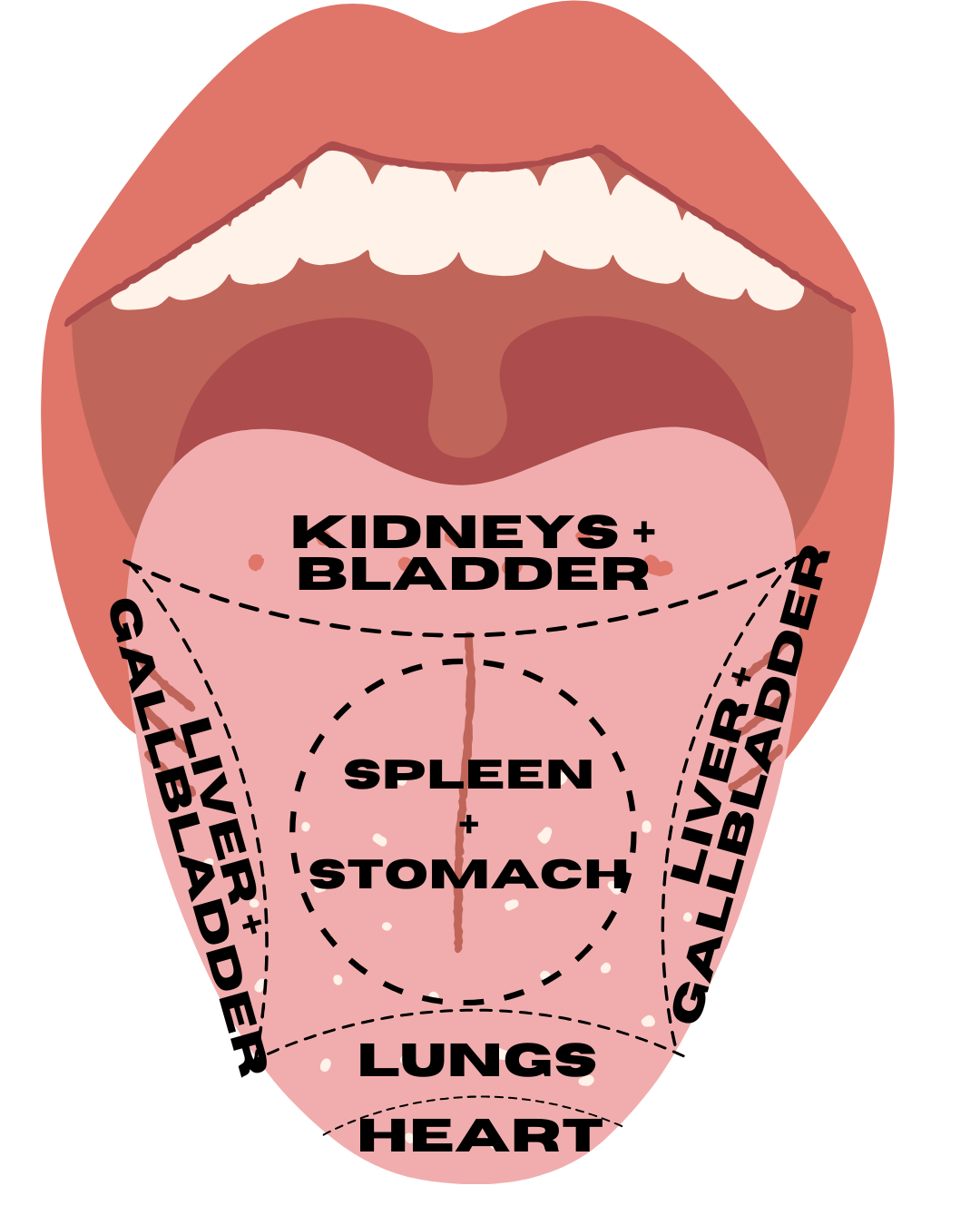
Tongue Diagram
Changes in specific regions of the tongue can help practitioners identify patterns of imbalance and create personalized treatment plans for every patient.
In Traditional Chinese Medicine, different areas of the tongue correspond to different organ systems.
Tip of the tongue: Heart and Lung systems
Center of the tongue: Spleen and Stomach systems
Sides of the tongue: Liver and Gallbladder systems
Back of the tongue: Kidney, Bladder, and lower digestive systems
How Tongue Diagnosis Supports Personalized Care
One of the greatest strengths of TCM is its individualized approach to health. While two people may experience similar symptoms, the underlying causes can be entirely different.
Tongue diagnosis plays a crucial role in helping practitioners determine the most appropriate treatment strategies for each individual. Along with pulse diagnosis, health history, and symptom assessment, it guides practitioners in recommending various treatments that may include:
Acupuncture
Herbal medicine
Cupping therapy
Gua Sha
Nutritional guidance
Lifestyle recommendations
Stress management techniques
Since the condition of the tongue can change over time, practitioners often use it to monitor progress throughout a treatment plan.
Can You Diagnose Yourself Using Your Tongue?
Although it can be intriguing to notice changes in your tongue, self-diagnosis is not advisable. Tongue diagnosis is complex and requires specialized training and experience for accurate interpretation.
Various factors, such as recent meals, beverages, medications, brushing habits, and lighting conditions, can influence the appearance of the tongue.
A qualified TCM practitioner assesses the tongue in the context of your overall health, rather than relying on a single observation.
The Bottom Line
Tongue diagnosis stands out as one of the most distinctive and valuable methods in Traditional Chinese Medicine. By analyzing the tongue's color, shape, coating, and moisture, practitioners can gain insights into the imbalances that may be influencing your overall health and wellness.
Whether you are looking for assistance with digestive issues, stress management, sleep disorders, hormonal regulation, chronic pain, or general health, tongue diagnosis aids in forming a treatment plan specifically designed for you.
At Nu Wave Acupuncture, tongue diagnosis plays a crucial role in every thorough TCM assessment, enabling us to better comprehend your body’s unique patterns and facilitate your path toward natural optimal health.
