

Traditional Chinese Medicine Explained: A Beginner’s Guide to Qi, Meridians, and Healing
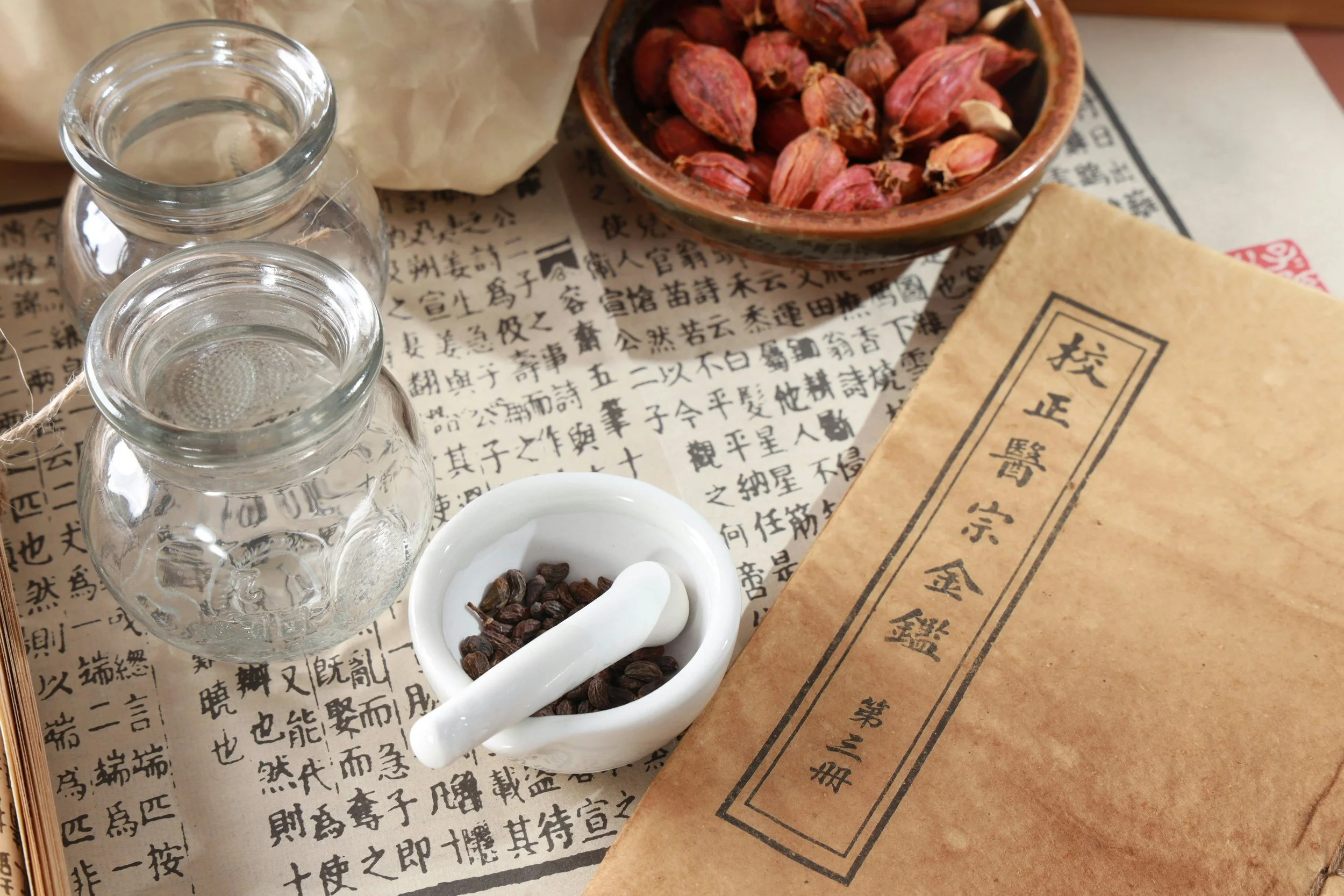
Traditional Chinese Medicine (TCM) is a holistic system originating in Asia that was originally outlined thousands of years ago. The system of healing is inherently functional and holistic, connecting the body’s energy systems, organ systems, physiology, and emotions when assessing and treating disease. The main goal is aimed at balancing the body’s Qi (vital energy), blood, yin, and yang to treat the root of illness. Thus, rather than focusing solely on symptoms, TCM aims to understand patterns of imbalance within the body and how those patterns affect physical and emotional health to promote vitality and longevity over time.
TCM, or Eastern Medicine, views the body as an interconnected system that is constantly adapting to internal and external influences from lifestyle factors, stress, environmental toxins, weather patterns, diseases, germs, etc.
Health is understood and achieved through a state of balance, seen as effective communication within these interconnected systems and our interactions with our environment and life as a whole.
Key practices/modalities used in treatments include Chinese Herbal Medicine, acupuncture, cupping, gua sha, moxibustion, nutritional and lifestyle recommendations, and more. The theory and foundation of TCM is what allows Licensed Acupuncturists to holistically assess your health and effectively bring you back into balance to help you achieve your health goals. To fully understand how this holistic system works, it is important to become familiar with the main concepts of Qi, meridians, and the body's natural ability to self-regulate and heal.
Traditional Chinese Medicine’s Core Philosophy
TCM is rooted in the observation of nature and the belief that the human body follows the same laws that govern the natural world around us. Concepts such as Yin-Yang Balance, where TCM focuses on maintaining harmony between two opposing forces, and the Five Elements are key primary philosophies that the rest of the medicine is built on. These concepts are critical frameworks for describing balance, movement, and change within the body.
Yin and Yang Balance
With Yin and Yang Balance, Yin and Yang represent two complementary forces that exist in constant relationship to one another. Yin is associated with structure, nourishment, rest, and cooling, while Yang represents activity, warmth, movement, and transformation. Health depends on the dynamic balance between these two forces. When one becomes excessive or deficient relative to the other, symptoms and disease can arise. Licensed Acupuncturists are always assessing the interrelationship between yin and yang of the whole body, the spirit, and individual organs.
In Traditional Chinese Medicine (TCM), the concept of yin and yang describes the dynamic balance that sustains health and harmony within the body. Four key principles explain this relationship.
First, yin and yang are opposites, representing contrasting qualities such as cold and heat, rest and activity, or interior and exterior.
Second, they are interdependent, meaning one cannot exist without the other—for example, without yin (substance, nourishment), yang (function, activity) has no foundation.
Third, yin and yang are in a state of mutual consumption and support, constantly adjusting to maintain balance; when one becomes excessive or deficient, the other is affected.
Finally, they are capable of transformation, as yin can turn into yang and vice versa under certain conditions, such as night transitioning into day. Together, these principles illustrate that health in TCM is not a static state but an ongoing process of dynamic equilibrium between yin and yang.
This can be understood as ‘deficiency or excess’. For example, if you are ‘yin deficient’, then yang may appear as excess relative to yin being low, but nourishing yin is what will calm the excess yang. You can also have excess yang, or heat, which would then call for expelling and resolving the excess heat that is not needed by the body, which may have been acquired by environment or external invasions (illness).
The Five Elements
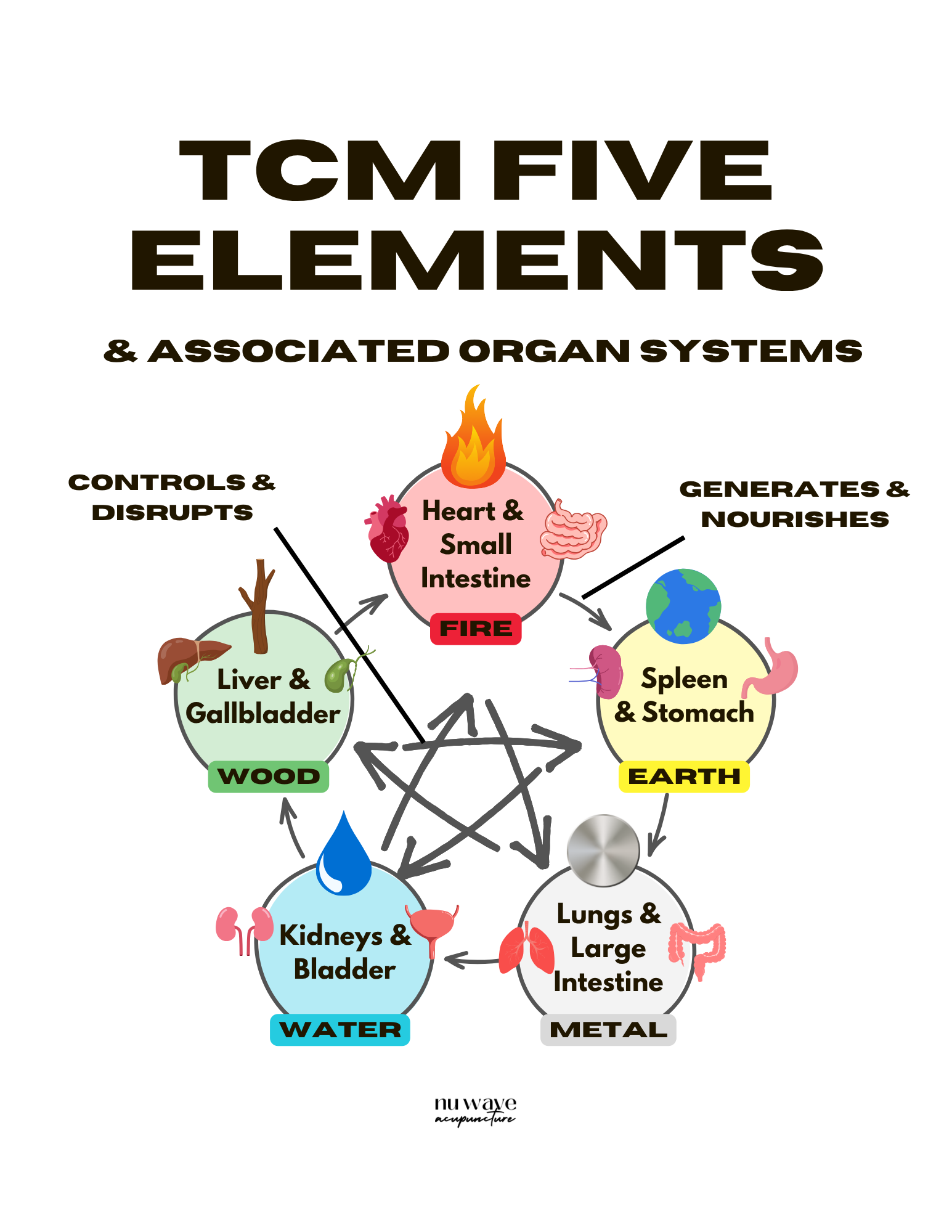
In Traditional Chinese Medicine (TCM), the Five Elements—Wood, Fire, Earth, Metal, and Water—describe the fundamental patterns through which the body, mind, and environment interact. Each element corresponds to specific organs, emotions, seasons, and physiological functions, forming an interconnected system heavily utilized in assessing and diagnosing patients through the lens of TCM. It highlights that organ systems are not separate, but affect and interact with all other organ systems simultaneously. It is their balance and harmony that allows us to feel well and have no symptoms of imbalance.
Each element corresponds to the following organs:
Fire - Heart & Small Intestine
Earth - Spleen & Stomach
Metal - Lungs & Large Intestine
Water - Kidneys & Bladder
Wood - Liver & Gallbladder
The relationships between the elements (and organs) are governed by two main cycles:
The generating (sheng) cycle reflects nourishment and support, where each element promotes the next (for example, Wood feeds Fire, Fire creates Earth, Earth bears Metal, Metal enriches Water, and Water nourishes Wood).
The controlling (ke) cycle maintains balance by preventing excess, as each element regulates another (such as Water controlling Fire or Wood controlling Earth).
When these relationships are harmonious, the body functions smoothly; however, imbalance—whether through overacting or failing to control—can lead to patterns of disharmony. Thus, the Five Elements framework illustrates how health in TCM depends on the continuous, balanced interaction of these dynamic forces.
What Is Qi?
Qi (pronounced “chi”) is one of the most fundamental concepts in TCM, yet it is often misunderstood. Qi is seen as the vital force or energy that operates all physiological processes in the body. It is responsible for movement, transformation, protection, warmth, and overall vitality.
Qi governs processes such as digestion, circulation, immune defense, metabolism, and even mental clarity. When Qi is strong and flowing smoothly, the body functions efficiently and adapts well to stress. When Qi becomes deficient or stagnant, symptoms such as fatigue, pain, digestive issues, emotional distress, or illness may develop.
Additionally, Qi is not considered mystical or separate from physical function. It is a way of describing how the body organizes and regulates itself on a functional level, long before structural disease becomes apparent. In acupuncture sessions, acupuncture needles are used at specific points to access Qi to harmonize functions in the body before actual organs are affected. This is why TCM is excellent for preventative care or when blood tests or scans do not show any issues - your body is showing you signs, but not enough to negatively impact the system, blood, or structure.
Types of Qi and Their Roles in the Body
The thing most people don’t know about Qi is that there are many different types of Qi according to TCM. In TCM, it recognizes multiple types of Qi, each having a specific origin and role in maintaining health. This is because Qi is the energy that governs all physiological processes of living beings. Understanding the different types allows us to assess imbalances more deeply.
Some types of Qi:
Yuan Qi, or Original Qi, is inherited at birth and kept stored in the Kidneys. It provides the foundational vitality that supports growth, development, and long-term resilience.
Zong Qi, or Gathering Qi, is formed from the combination of air inhaled by the Lungs and nutrients that are extracted from the body by the Spleen. It supports respiration, circulation, and the strength of the Heart and Lungs.
Ying Qi, or Nutritive Qi, circulates within the meridians and blood vessels to nourish the organs, muscles, and tissues.
Wei Qi, or Defensive Qi, flows at the surface of the body and acts as the first line of defense against external pathogens. It also regulates body temperature and sweating.
These different forms of Qi work together, supporting daily energy levels, immune function, emotional balance, and recovery.
What Are Meridians?
Meridians are the pathways through which Qi and Blood circulate throughout the body. They were discovered thousands of years ago by ancient Chinese sages and leaders through meditation. They form an internal network that connects the organs, muscles, joints, skin, and sensory organs into a combined system. Through the meridians, information is distributed to where it is needed the most. Acupuncture points are along each of the meridians. They are areas where Qi is most accessible. By accessing acupuncture points during treatments, the body heals itself through the balance of Qi, Blood, Yin, Yang, and other external factors.
Meridians are not physical structures like nerves or blood vessels that can be seen under a microscope. Instead, they are functional pathways that describe how energy and physiological activity move and communicate throughout the body. Pain, tension, or dysfunction often follows meridian pathways, which is why symptoms may appear far from their root cause. The acupuncture points used in treatments are along all of the different meridians. When people refer to meridians in the context of acupuncture, they are typically referring to the primary channels where the acupoints are.
The Meridian System Explained
The main meridian system consists of twelve main organ meridians, known as the primary channels/meridians. Each meridian is associated with a Yin or Yang organ, such as the Liver, Heart, Spleen, Lungs, Kidneys, and their Yang organs. These meridians regulate physical function and emotional states in the body.
For example, the Liver meridian is closely associated with the smooth flow of Qi, emotional regulation, and musculoskeletal flexibility. This meridian runs from the toes, up the inside of the leg, up the torso to the chest. This means you can use any point along that meridian to treat a Liver-based imbalance according to TCM.
For example, when Liver Qi becomes stagnant, symptoms such as tension headaches, irritability, menstrual irregularities, or muscle tightness may occur. Because meridians connect the entire body, imbalances in one area can present as symptoms elsewhere, and you may also receive acupuncture points locally to the area of pain and distally based on the meridians. This interconnectedness allows TCM to identify root causes rather than focusing solely on symptom location.
How Imbalances Develop in the Body
According to TCM, illness develops when the body loses its ability to maintain balance and smooth circulation. Common contributing factors include chronic stress, overworking, poor diet, lack of rest, emotional strain, trauma, environmental influences, and aging.
Over time, these factors can lead to patterns such as Qi stagnation, Qi or Blood deficiency, excess heat, internal cold, or dampness accumulation. These patterns are how Licensed Acupuncturists and Doctors of Chinese Medicine describe one’s condition - it is about how the body is struggling to regulate itself, often long before conventional diagnostic tests even show abnormalities.
How Healing Works in Traditional Chinese Medicine
Healing in TCM is understood as the restoration of balance, flow, and communication within the body. Rather than forcing the body to change, TCM treatments aim to support the body's innate capacity to heal and regulate itself.
By addressing underlying patterns rather than isolated symptoms, TCM aims to create long-term improvements in health. This approach highlights prevention, resilience, and adaptation rather than focusing solely on symptom management.
How TCM Modalities Influence Qi and Meridians
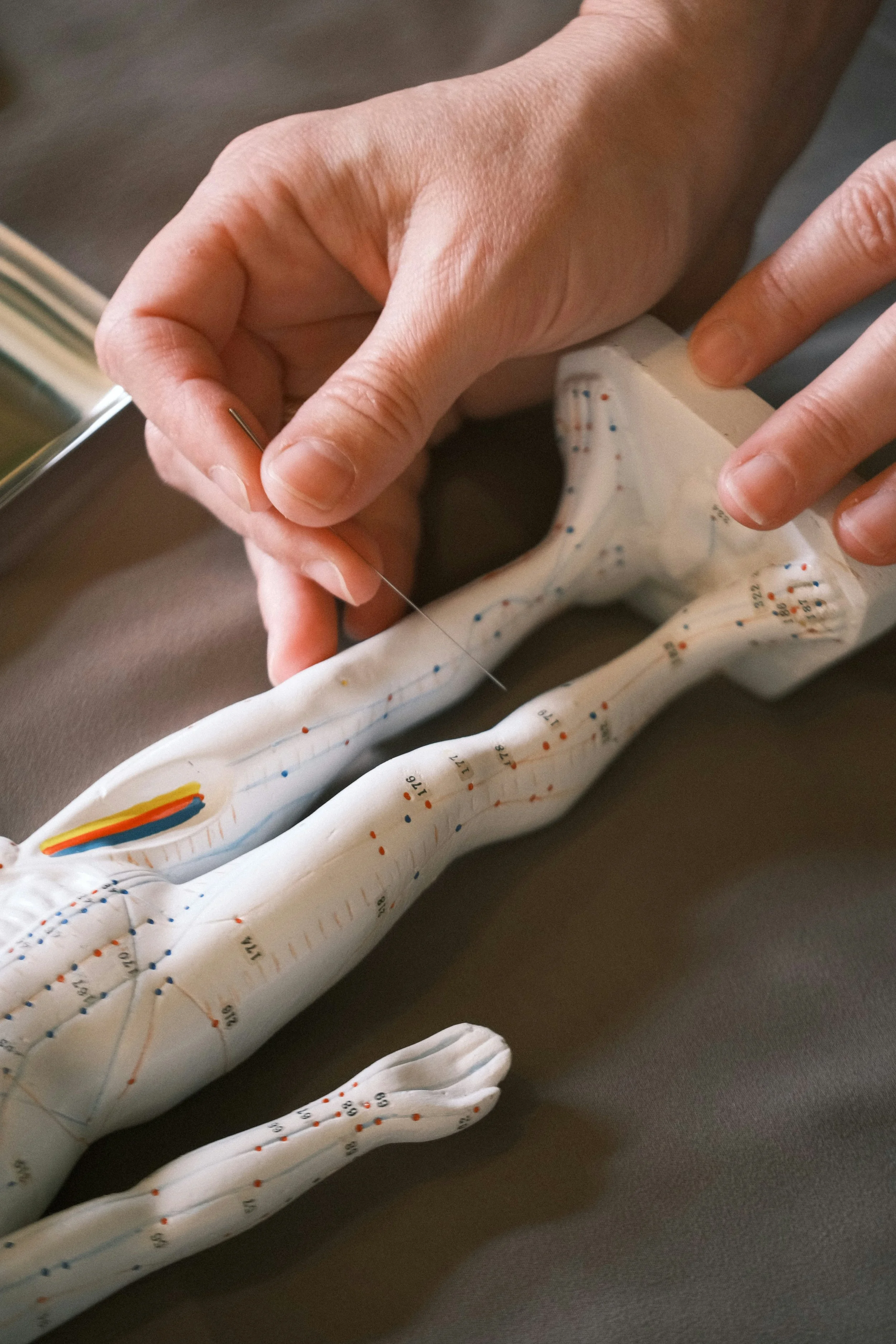
Acupuncture works by stimulating specific points within the meridian system to regulate the flow of Qi and Blood. Based on the individual's patterns, acupuncture may move stagnation, improve deficiencies, relax excess activity, or harmonize the organ systems.
From a more traditional perspective, acupuncture helps restore communication within the body. From a modern perspective, research suggests that acupuncture influences the nervous system, circulation, inflammation, and hormonal regulation. These two perspectives are complementary ways of understanding the same processes.
In addition to acupuncture, TCM includes a variety of modalities that are often used together for more comprehensive care. Chinese Herbal medicine further supports the internal balance of the body at a biochemical and energetic level. Moxibustion, another TCM modality, provides warmth and stimulation to support Yang and circulation. Cupping, gua sha, and massage therapy also help release stagnation in the muscles, fascia, and meridians during sessions.
What to Expect From a TCM Approach to Health
Traditional Chinese Medicine focuses on individualized care. Treatment plans are customized to the person, not just the condition, and progress is usually gradual and cumulative. Consistency and patient participation play an important role in achieving lasting results.
Rather than masking symptoms, TCM aims to create internal conditions that allow the body to function optimally over time. TCM offers a holistic framework for understanding health that integrates physical symptoms, emotional well-being, and environmental influences. By viewing the body as a dynamic, interconnected system, TCM provides a lens through which healing becomes a process of restoring balance, flow, and resilience, supporting not just the absence of disease, but the presence of true health. Acupuncture and TCM treatments are typically recommended weekly or biweekly, depending on your health goals.
